Thursday, July 9, 2015

YA Resouce: Midwinterblood


Midwinterblood
Written by Marcus Sedgwick

Published in 2014 by Square Fish Publishing
Ages 12-18 years | Grades 6 and up

ISBN: 978-1250040077

Awards
2014 Michael L. Printz Award Winner


Review
Marcus Sedgwick's Midwinterblood centers around Blessed Island, a Scandinavian remote island that is almost a charters itself and appears to be in a world of its own. Working in reverse chronological order, Midwinterblood takes readers through time exploring the different relationships between the two main charters, Eric and Merle. Each chapter offers a different vignette in time, occurring during a specific moon; the Midsummer Moon, Flower Moon, the Harvest Moon, the Grain Moon, the Hunters Moon, the Blood Moon. Readers will enjoy following the part lives of Eric and Merle, as Midwinterblood will leave a lasting impression in its final vignette. 

From vampires, to ghosts, to WWII, to a magical flower with mysterious healing and anti-aging powers, readers will enjoy the intertwining genres of romance, horror, fantasy, and mystery.

Professional Reviews
Common Sense Media
New York Times
Kirkus 


Teaching Ideas

Reading 
1. SOL 9.6: The student will develop narrative, expository, and persuasive writings for a variety of audiences and purposes.
Students will write an additional vignette to add to Midwinterblood, creating a different relationship between Merle and Eric during another point in time. 

2. SOL 10.8:The student will collect, evaluate, organize, and present information to create a
 research product.
Students will research the different moons described in Midwinterblood (the Flower Moon, the Harvest Moon, the Grain Moon, the Hunters Moon, and the Blood Moon) and create a digital presentation explaining the significance of each.

Geography
3. WG.1: The student will use maps, globes, satellite images, photographs, or diagrams to create and compare political, physical, and thematic maps.
Students will create a map of  the fictional Blessed Island relative to it's location to the United Sates based on Sedgwick's description from the book. Students will list characteristics of the island to include population, highest/lowest elevation, average rainfall, etc.

Life Science
4. LS.5: The student will investigate and understand the basic physical and chemical
processes of photosynthesis and its importance to plant and animal life.         
Students will investigate the dragon orchid flower through an inquiry-based lab centered on the 12 Principles of Plant Biology.

Visual Arts
5. AI.6: The student will use a variety of traditional and contemporary media (e.g., two-dimensional, three-dimensional, multidimensional) to create works of art.
Sedgwick's book features the real life painting Midvinterblot, created by artist Carl Larsson in 1915. The painting and final vignette of the story align as the king is sacrificed. Students will recreate another scene from Midwinterblood using a medium of their choosing. 


Partner Titles

18619684
The Time Traveler's Wife by Audrey Niffenegger follows a similar story line to Midwinterblood, following the relationship of the main characters through different periods of time. Readers will enjoy the science fiction aspect of time travel as the main character, Henry, weaves through time without warning as a side effect of a rare Chrono-Displacement Disorder. This book was chosen because it will be of high interest to students and its likeness to Midwinterblood, and because it is a 2004 Alex Award winner.(Kirkus Review)

9972882
Juliet Immortal by Stacey Jay takes a twist on the classic Shakespearean play Romeo & Juliet. Readers will be on the edge of their seat as protagonist Juliet faces off against antagonist Romeo as the weave through their immortal lives. This book was chosen because it will be of high interest to students who have read the Shakespearean Romeo & Juliet as it offers alternative points of view on the classic play. (Kirkus Review)

13262783
Every Day by David Levithan tells the story of "A," a body jumper who wakes up in the body of a different person each day. "A" shifts without warning into bodies of all genders, races, and ethnicity, with the one constant being the "A" is always 16 years old. Readers will follow "A" as they explore his love for a girl as he jumps into different bodies, wondering if she will still love him regardless of his exterior. Every Day was chosen for its literary authority because the author, David Levithan, is the founding editor of PUSH, a Young Adult imprint of Scholastic Press. This book is a 2012 Andre Norton Award winner and will be of high interest to students as it explores issues of love and identity. (Kirkus Review)
18079719
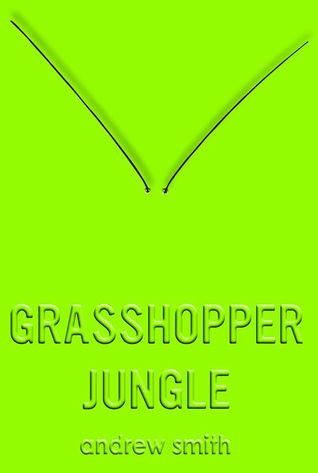
Grasshopper Jungle by Andrew Smith gives readers a thrilling science fiction twist on horror and humor. Adolescence, giant praying mantises, and the end of humanity come to head at the hands of Smith's main character.  This book was chosen because it is a 2015 Michael L. Printz Award Nominee and because it will be of high interest to students who enjoy reading science fiction titles. (Kirkus Review)

21469108
The Ghosts of Heaven by Marcus Sedgwick travels through time with its characters, much like Midwinterblood. Readers will enjoy Sedgwick's combination of historical fiction with science fiction as they follow the story lines of a prehistoric young girl, a 17th century witch, a 20th century poet, and an astronaut in the distant future. This book was chosen because of its recent publication date and its nomination for the 2015 YA Book Prize Award. Also, this book will be of high interest to students as it gives different perspectives on historical fiction time periods. (Kirkus Review)


Further Exploration

Marcus Sedgwick's blog post gives insight to the moons, the hare, and folklore present in Midwinterblood.

The Midwinterblood book trailer for an anticipatory activity prior to reading the book. 

A biography of Midwinterblood author Marcus Sedgwick gives readers insight to the writer's life, inspiration, and other projects. 

A website explaining reincarnation, as characters Merle and Eric are reincarnated throughout the story.

The Midnight Garden blog offers a Q & A with Marcus Sedgwick, discussing the research and background for the novel.

A list of full moon names and their origins for readers to connect to the moons for each chapter of Midwinterblood. 

Website of Carl Larssen, artist who painted Midvinterblot, the inspiration for Marcus Sedgwick's title piece.


References

Biography: A little personal history. (n.d.). Retrieved from http://www.marcussedgwick.com/biography.html/.

Cacciapaglia, D. (n.d.). Origins of full moon names. Retrieved from http://www.erh.noaa.gov/rnk/Newsletter/Fall%202006/Full_Moon_names.htm.

Jay, S. (2011). Juliet immortal. New York: Delacorte Press.

MacmillanChildrens. (2012). Book trailer: Midwinterblood by marcus sedgwick. YouTube [video file]. Retrieved from https://www.youtube.com/watch?v=IbMwHdTrcfc.

The Midnight Garden. (2013, February 04). Q & A with midwinterblood author marcus sedgwick. [Web log post]. Retrieved from http://www.themidnightgarden.net/2013/02/q-a-with-midwinterblood-author-marcus-sedgwick.html.

Niffenegger, A. (2004). The time traveller's wife. London: Jonathan Cape.

The official homepage of the artist Carl Larsson. (2013, May 06). Retrieved from http://www.clg.se/encarl.aspx.

Sedgwick, M. (2011). Midwinterblood. London: Indigo.

Sedgwick, M. (2011, October 11). Symbols and folklore. [Web log post]. Retrieved from http://marcussedgwick.blogspot.com/2011/10/symbols-and-folklore.html.

Sedgwick, M. (2015). The ghosts of heaven. New York: Roaring Brook Press.

Smith, A. (2014). Grasshopper jungle: A history. New York: Dutton Books.


Tsuji, T. (n.d.). A basic buddhism guide: On reincarnation. Retrieved from http://www.buddhanet.net/e-learning/reincarnation.htm.


YA Resource: Written in Bone


Written in Bone: Buried Lives of Jamestown and Colonial Maryland
Written by Sally M. Walker

Published in 2009 by Carolrhoda Books
Ages 10 and up | Grades 5 and up


ISBN: 978-0822571353


Awards
ALA Notable Children's Book for Older Readers (2010)
YALSA Award for Excellence in Nonfiction Nominee (2010)
Cybils Award Nominee for Middle Grade/Young Adult Non-Fiction (2009)


Review
Sally M. Walker chronicles her experience on the Jamestown Rediscovery excavation, alongside Doug Owsley and Bill Kelso, in her book Written in Bone: Buried Lives of Jamestown and Colonial Maryland. Each chapter focuses on a set of uncovered human remains, detailing the excavation process along with how the team works to together to determine the social class, race, gender, and eating/living habits of the subject. Through archaeological and forensic processes, Walker shows readers how remains tell whether they were once indentured servants, slaves, or leaders in early America. Readers will travel with Walker from the Jamestown settlement and original fort to the remains St. Mary's Chapel in Maryland, uncovering more about 17th century colonists along the way. 

Readers of Written in Bone: Buried Lives of Jamestown and Colonial Maryland will enjoy the scientific side of history while putting together their own narratives of how each subject lived in early Virginia and Maryland. This book is well suited for incorporation into theVirginia Studies and US History units, and ideal for avid historians.


Professional Reviews
School Library Journal
Kirkus


Teaching Ideas

Reading 
1. SOL 6.9: The student will find, evaluate, and select appropriate resources for a research product.
Students will discuss the difference between primary and secondary sources. They  will complete an activity where they distinguish between the two types of sources, explaining the difference and relevance of to research and what they can tell us about life in 1607 Jamestown. 

2. SOL 6.7: The student will write narration, description, exposition, and persuasion. 
Students will create a biography for a set of bones listed in excavation in Walker's text. This creative writing will integrate with factual information about Jamestown and will include details" about the person's life. 

Science
3. Bio.6: The student will investigate and understand bases for modern classification systems. Key concepts include fossil record interpretation.
Using different scenarios, students will analyze images of bones from the excavation and respond to prompts, such as "
The skeletons of animals such as snakes and rats are discovered among the remains in the trash pits of a 17th‑century Chesapeake colony. What would these findings suggest about life for the colonists during this time period?"

Virginia Studies and Reading
4. VS.2: The student will demonstrate knowledge of the physical geography and native peoples, past and present, of Virginia by describing how archaeologists have recovered new material evidence at sites including Werowocomoco and Jamestown.
4.6e: The student will read and demonstrate comprehension of nonfiction texts and summarize supporting details. 
Students will read chapter 3 of Written in Bone and will summarize the chapter, reflecting on the process used by archaeologists to determine as much as they can about skeletal remains. Students will reflect on the following question prompts: "How are the conclusions that are drawn about the skeletal remains influenced by other individuals, texts, events, or ideas?" and "What can you conclude about the life of Richard Mutton in colonial Jamestown?" 

Visual Arts
5. 4.1: The student will use steps of the art-making process, including brainstorming, preliminary sketching, planning, and reflecting, to generate ideas for and create works of art.
Students will create a replica of the original fort at Jamestown using the photos, descriptions, and information from the excavation in chapter one.


Partner Titles

94056
Blood on the River: James Town 1607 by Elise Carbone tells the story of Samuel Collier and his journey to the new world with Captain John Smith. The story follows Samuel's travels and how he learns life lessons in his interactions with Native Americans and other historical figures. The book was chosen because of the notable historical figures, dates, and locations used in the text, and because it will be of high interest being told from a young adult point of view. Also, Blood on the River was a 2007 Jefferson Cup Award winner. Reviewed by Gillian Engberg (Booklist, Apr. 2006, Vol. 102, No. 16, p58). 

557031
The Double Life of Pocahontas by Jean Fritz is another book that tells the story of Chief Powhatan's daughter, Pocahontas, and her struggles to balance her two lives. This book was chosen because it will be of high interest to students learning about the life of Pocahontas and because of the central focus on the interactions between the Powhatan Indians and colonists at Jamestown. (Kirkus Review).

559994
Jamestown, the Buried Truth by William M. Kelso gives readers insight into the archaeological digs and excavations at Jamestown. Kelso's work, detailed in the book, involves testing the DNA of the remains against early colonist descendants. This book was chosen because of its use and display of primary sources from excavation and because the author, William Kelso, was the head archaeologist of the Jamestown Rediscovery Project. This book also adds value to the overall collection of materials and resources on the early settlement of Jamestown for the classroom and school library. Reviewed by Douglas King (Library Journal, Sept. 2006, Vol. 131 Issue 14, p160). 

661341
Pocahontas by Joseph Bruchac recalls the events surrounding the arrival of colonists to Jamestown in 1607, told from the point of view of Pocahontas and John Smith. This book was chosen because Bruchac's story line is based on his research of John Smith's journals and because it will be of high interest to students as it documents the relationship between Pocahontas and John Smith and is told through the eyes of both characters. (Kirkus Review)

1900705
Dark Enough to See the Stars in a Jamestown Sky by Connie Lapallo is a story about Joan, a woman who sailed to Jamestown in 1609, leaving her daughter behind. This book was chosen because of its historical accuracy, as Lapallo based her story on the research of the true women and children at Jamestown and it is from the perspective of women at the Jamestown settlement. Also, Lapallo is a historian regarding early 17th century settlers. Reviewed by Amy Pickett (School Library Journal, Aug. 2011, Vol. 57 Issue 8, p59). 


Further Exploration

The Historic Jamestowne website showcases the "Jamestown Rediscovery," detailing history through timelines, retellings, and preservation. Students will enjoy reading about Pocahontas, John Smith, the history of Jamestown, and more. 

A timeline of events for the book Written in Bone: Buried Lives of Jamestown and Colonial Maryland. Readers can enjoy following the settlement and development of the colony at Jamestown, and later follow each step of the excavation at the site.

Forensic Files of 17th Century Chesapeake is an exhibit that chronicles the excavation of Jamestown. Viewers have the opportunity to see into the past through the excavated bones and get a sense of life in Jamestown during the early 17th century. 

Written in Bone: Life and Death in Colonial Chesapeake is a YouTube video where archaeologist Doug Owsley shares his findings on a guided tour through the excavation at the Jamestown settlement. Viewers will see the excavation process and hear Owsley explain how his discoveries have contributed to uncovering history. 

The Colonial Williamsburg HERO website from the Colonial Williamsburg Foundation offers electronic field trips and interactive web activities. Users can access the activities live or on demand at any time. Each activity comes with a video series and activities to apply learning. 

The Jamestown Interactive website from National Geographic allows viewers to virtually explore the Jamestown settlement through a close up lens. Viewers can explore the original fort, life & death in Jamestown, and the impact of colonization in the new world.

The Jamestown-Yorktown Foundation offer a series of videos on Jamestown. Viewers can learn about the discovery of Jamestown, the economics of Jamestown, and more.


References

Carbone, E. L. (2006). Blood on the river: James town 1607. New York: Viking.

The Colonial Williamsburg Foundation. (2015). Colonial williamsburg: Hero. Retrieved from http://hero.history.org/.

Fritz, J. (1987). The double life of pocahontas. New York, NY: Puffin Books.

Historic Jamestowne. (2015). Retrieved from http://historicjamestowne.org/.

Jamestown-Yorktown Foundation. (n.d.). History is fun: Jamestown videos. Retrieved from http://www.historyisfun.org/video/?cat=36.

Kelso, W. M. (2006). Jamestown, the buried truth. Charlottesville: University of Virginia Press.

Lapallo, C. (2008). Dark enough to see the stars in a jamestown sky. Coral Springs, FL: Llumina Stars.

Louisianabelieves.com. (n.d.). Unit: Written in bone. Retrieved from https%3A%2F%2Fwww.louisianabelieves.com%2Fdocs%2Fdefault-source%2Fteacher-toolbox-resources%2Funit-plan-english-language-arts-grade-7-sample-written-in-bone.pdf%3Fsfvrsn%3D7.

Massie, E. (2007). 1609: Winter of the dead: A novel about the founding of jamestown. New York: Tor.

National Geographic Magazine. (2008). Jamestown interactive. Retrieved from http://ngm.nationalgeographic.com/2007/05/jamestown/jamestown-standalone.

Smithsonian Education. (2008). Written in bone: Life and death in colonial chesapeake. YouTube [video file]. Retrieved from https://www.youtube.com/watch?v=So6L3s1tc2E.

Smithsonian Museum of Natural History. (2009). Written in bone: Forensic files of the 17th century chesapeake educator's manual. Retrieved from http://www.mnh.si.edu/education/printable_resources/WrittenInBoneEducatorManual.pdf.

Smithsonian Museum of Natural History. (2014). Written in bone: Forensic files of the 17th century chesapeake. Retrieved from http://anthropology.si.edu/writteninbone/.

Walker, S. M. (2009). Written in bone: Buried lives of jamestown and colonial maryland. Minneapolis, MN: Carolrhoda Books.

Walker, S. M. (2009). Written in bone timeline. Retrieved from https://www.lernerbooks.com/writteninbone/assets/timeline.pdf.


Monday, August 4, 2014

Final Project: "Web 2.0 Your Heart Out"

It’s hard to believe it, but the final is FINALLY done!!! I don’t think I’ve ever hit as many roadblocks as I have while working on this, but in the end it all came together and I am happy with outcome. I chose to gear this presentation toward fourth grade teachers, specifically targeting fourth grade language arts. As a fourth grade teacher I have found it very difficult for me to incorporate technology and web 2.0 tools into my reading and writing instruction, so I chose to make that my focus area.

Designing this presentation took a little more time than anticipated because I initially chose a white background with Reynolds’ (2014) concept “express the essence of less” in mind. I figured white background would be a sure way to go, especially if I was going to include JPEG images or embed videos. While working I saw that a simple white background wasn’t the best way to utilize the negative space on the presentation slides and did not blend well with the chosen graphics and images. After several attempts to find a background that complimented all of the design elements on the presentation slides I decided on a dark variation of a gray background called “charcoal mist.” I liked that this color was darker than standard gray, but also not as dark and bold as black. Choosing an achromatic background color like “charcoal mist” helped me effectively eliminate the problem of “color chaos” (p. 84) I was seeing when trying out monochromatic colors.

Choosing fonts was an easy task for me, something I struggled with while working on my previous slide doc assignment. As with the slide doc, I chose to stick within the serif family of fonts as Reynolds (2014) explains that “serif fonts are commonly believed to aid readability for longer sections of text because the serif leads the eye from one character and one word to the next” (p. 48). At Reynolds’s (2014) suggestion I used the fonts Rockwell and Futura, as they were the most effective complimentary fonts and it was recommended they be used together. With the background of the presentation slides being dark I chose to keep the font color white, as “you can achieve a great deal with only black and white” (p. 82).

Despite the challenges I faced while working on this, I learned more through the experience of it all. It almost felt that I was both the presenter and the audience as I was adapting the tools for the presentation. As I came up with tools and examples, I created examples with the idea in mind to use them for this upcoming school year. Hopefully I can now “web 2.0 my heart out” and spruce up my own ILA activities!

Here is the final product... enjoy!


Sources

Reynolds, G. (2014). Presentation zen design: A simple visual approach to presenting in today's world. 2nd ed. New Riders/Pearson.  

Friday, August 1, 2014

Course Reflection

I began this course with an open mind, not knowing what to expect. The course title, "Production of Instructional Materials" seemed a little vague, and with this being a course in the Library Science endorsement I have to admit that I thought it would be geared more towards card catalogs and things of that nature. Boy, was I wrong!

I came into this class thinking I was technologically savvy, but little did I know I was far from it. Our first few assignments included creating a blog and an infographic. I had never blogged before this class, only read them.  Before this class I hadn't even heard of the word infographic! LIBS 602 has brought me out of my comfort zone and into the world of web logging, digital reflecting, and web 2.0 discovery.

Learning about makerspaces has really stuck with me and I have already created a place in my classroom for students to use as a designated makerspace. I have really enjoyed learning about each of the different multimedia tools in our sandbox and assignments. I also have already looked at my upcoming school year and have figured out how I can incorporate QR codes, video tools, and image tools into my instructional activities. I feel more confident not only in how I can integrate the web 2.0 tools in my classroom, but also in my future library, and I am very excited for what that future holds.

I have been exposed to so many media and web 2.0 tools that I didn't even know existed, and for that I am grateful. I am glad that I was wrong about what this class entailed and I am now looking forward to what's in store for the rest of the Library Science endorsement program!

Saturday, July 26, 2014

Following "The Unquiet Librarian"

Throughout the LIBS 602 course I have come across many blogs posts, tweets, and pins about school librarians. I currently follow several different school librarian Pinterest boards and have found countless resources available to me as I learn and explore the tools used in this class. The day I stumbled across Adventures of Library Girl I was in heaven! I loved this blog and it gave me great ideas not only for the assignments I was working on, but ideas for my upcoming school year and future as a Library Media Specialist. 

Since I am already familiar with and follow Adventures of Library Girl, I explored the other blogs and really enjoyed The Unquiet Librarian. Not only was the layout calm and easy for me to follow, but I also found the content be high quality and relevant to me as I progress through the Library Media Specialist endorsement program. The first post I came across was about makerspaces, which was perfect because it was fresh in my mind from our campus visit to ODU. I love the idea of makerspaces in school libraries and the Skype session with Mae Craddock really motivated me to learn more about how to incorporate this idea into an elementary school library. 

The most recent post from The Unquiet Librarian titled, "Growing Learning Communities Through School Libraries and Makerspaces - Creating, Constructing, Collaborating, Contributing" really helped break down what makerspaces are through a slideshow that included definitions, purposes, examples, website resources, and images showing students using the makerspace in her library. It was a perfect combination of concrete information that helped drive home the importance and benefit of having makerspaces available to students and teachers in the school. Further exploration into this blog showed me other great resources, such as using Vine videos to show an explanatory conversation, students at work, or a demonstration. 

I look forward to following more of The Unquiet Librarian and incorporating these ideas into my future library!


Sources

Adventures of Library Girl. (2014). Blog. Retrieved July 26, 2014, from http://www.librarygirl.net/.

The Unquiet Librarian. (2014). Blog. Retrieved July 26, 2014, from http://theunquietlibrarian.wordpress.com/.

AASL Best Websites for Educators

The American Association of School Librarians has a great resource titled, "The Best Websites for Teaching and Learning 2014." This list includes websites for media sharing, digital storytelling, file management/organization/sharing, social networking, content related sites, and curriculum collaboration sites. Each site includes a brief description, target age level, and a tip for its usage. Though I found that most of the target ages were for upper grades and less were targeted for K-12, I explored many of the sites and found that they an be adapted to any grade/age level. Of the list my three favorite were Alchemy Learning, Vocabulary.com, and Canva. 


Alchemy Learning:

This website is a great tool for creating digital lessons. I love the idea of taking what you've taught in class and creating a digital version. This can be helpful for students who are absent for one day as well as those students who are absent longer for whatever reason. 

Alchemy Learning can serve as a great tool for assistance with homework. Teachers can create short video clips with tips, tricks, and reminders for the homework; especially if the homework is based on a new skill taught that day. As a fourth grade teacher I see this as a great resource for math homework... fourth grade math is a struggle!

Aside from homework assistance tutorials, Alchemy Learning can be used to create a unit review in content for an upcoming test, and the video can be linked to the class website or email out to parents. It can also help with project assignments. I often find that I have to repeat directions for projects to both parents and students, and I also often have to show examples and sometimes do a small demonstration (trifolds, etc.). Alchemy Learning would be a great place to post instructions for projects and include examples from past projects as well as any other necessary tutorials. As with the test review, this can be posted on a class website to be readily available to students and families throughout the project time frame. 

Visit the Alchemy Learning website here.


Vocabulary.com:

Vocabulary skills were a statewide area of need in fourth grade this past year based on previous SOL data. As a TAG teacher I am given some resources for vocabulary instruction, but the Vocabulary.com website can take vocabulary instruction to a whole new level.  

In exploring this website I found that it can be completely adapted to any unit you are teaching. There are preset word lists available, but my favorite feature was the ability to create my own word lists. Vocabulary.com can incorporate cross-curricular learning by giving teachers the ability to create word lists from math vocabulary, content vocabulary, and even vocabulary from novel studies. 

This site provides students review questions, sentence examples, and also allows students to track their mastery of words with badges. The "Leaderboard" tracks student progress and makes it a fun, challenging game-like activity while they are learning. Students can use this site in the classroom as a station rotation during any of of their subjects, or it can be assigned as a homework component as well. 

Visit the Vocabulary.com website here.


Canva:

Canva is a great website for the creative side of learning. I try to create an environment of project based learning for assessments and this website is a great resource for students. Many of my projects are presented in a menu format where students choose up to three to create. Often they include items such as brochures, flyers, game boards, posters, and trading cards.

Over the years I have noticed a shift in the project mediums from handmade items toward digitally created products. Canva can provide students with the means to create their digital product with ease. Canva can help eliminate the stress of too many options by providing stock backgrounds, images, and fonts; however students can also upload their own images as well if they like.  A great aspect of Canva is that it includes helpful how-to video clips (they helped me!) as well as design tutorials. This can help parents working with their child as they learn how to navigate through the site.

Though Canva says it is for grades 6-12, I can easily see my students working on this at the elementary level. Teachers can do an in-class tutorial, or team up with their Library Media Specialist and ITC to demonstrate for students. Great for at home projects, Canva can also be used in the classroom for a long range project (similar to the service learning projects) or for a fun school-wide activity, such as "Design a poster to promote your school library's upcoming Scholastic Bookfair."

See the Canva website here.


Sources

Alchemy Learning. (n.d.). Retrieved July 26, 2014, from http://www.alchemylearning.com/.

Canva. (n.d.). Retrieved July 26, 2014, from https://www.canva.com/.

Vocabulary.com. (n.d.). Retrieved July 26, 2014, from http://www.vocabulary.com/. 

Tuesday, July 1, 2014

Layered Reality

Here are two my two QR Code Creations:

                   Shelver Game QR Code                       Voice QR Code 
                                                                                  
I have worked with QR codes in the past as part of a musical for my current elementary school, so I am familiar with their uses and purposes. With that being said, I have only worked with QR codes that served as links to informational websites (our school musical website), not multimedia tools. I visited QR Code Monkey (http://www.qrcode-monkey.com/) to create my first layered reality tool. This site was incredibly user friendly and provided many options for creating the QR code. To create the code I was able to simply copy and paste the website link into the box. I had the option to choose a color, create an effect on the QR code icon, or add a logo to the front of the QR code. QR Code Monkey allows its users to save their QR codes as PNG images; a format that supports “lossless compression” (Reynolds 2013) and features a transparency effect that is ideal for websites. I chose to link my QR code to a library game called “Shelver” (2013) where students are able to virtually sort books on a shelf by their fiction call numbers or by Dewey Decimal. I thought that this game was not only a fun game for students to play, but also content relevant as it reinforces the ABC order skill.

Having been familiar with link based QR codes, I chose to also create a voice QR using QR Voice (http://qrvoice.net/). On a positive note, this site was very easy to use. I assumed that I would have to record my voice, however all I had to do was type in the sentence that I wanted read aloud. It was quick and simple, and when I finished typing my sentence I clicked the QR code icon and my QR appeared below. On a negative note, this site lacked many features. There was a character limit in the text box, and so it took several attempts to come up with something meaningful that fit. The site did not offer any options to choose a different color or add a logo, nor was there any way to download or save the QR code. I was provided with a link to access the code in the future, but I ended up having to take a screen shot of the image and save it as a PNG file for future use. For this voice QR code I chose to record a reminder for students to return books while at the self-checkout station.

Augmented reality was an entirely new concept to me. In an effort to better acquaint myself with this exciting new tool, I viewed the Aurasma TED Talks (2012) video that demonstrated how to create and use the Aurasma (http://www.aurasma.com/) app. I also visited several websites and blogs that demonstrated finished products and offered suggested uses for augmented reality in both the classroom and school library. I really like the idea of taking a still image and having the capability to make it come to life. It can take visualization and your imagination to a whole new level, especially when applying Aurasma to fiction books.

QR codes can serve as an interactive means to deliver information, such as providing directions to students (as in the voice QR code I created) or a link to the library website. Library bulletin boards can feature QR codes that show information about the bulletin board content, such as display on Read Across America or the Scholastic Book Fair. Students can use voice QR codes in their library media lessons by recording their voice with a review of a book they have read or narrating a digital storytelling project. Augmented reality can assist students with biography research projects by having a biography show a video clip with information on that famous person. It can also highlight an author to showcase an interview with the authors of a book or series. Augmented reality can also serve as an interactive genre scavenger hunt with students as they find clues throughout the library. Incorporating layered reality into the school library can provide a technological boost to attract students, teachers, and families.


Sources

Aurasma. (2014). Aurasma Systems Limited. [Mobile application software]. Retrieved from http://www.aurasma.com/. 

Mills, M. (2012, June). Matt Mills: Image recognition that triggers augmented reality. [video file]. Retrieved from https://www.ted.com/talks/matt_mills_image_recognition_that_triggers_augmented_reality.

QR Code Monkey. Digital image. http://www.qrcode-monkey.com/. QR Code Monkey, n.d. Web. <http://www.qrcode-monkey.com/>.

QR Voice. Digital image. http://qrvoice.net/?id=1kaBROQ. QR Voice, n.d. Web. <http://qrvoice.net/?id=1kaBROQ>.

Reynolds, G. (2014). Presentation zen design: A simple visual approach to presenting in today's world. 2nd ed. New Riders/Pearson.

Shelver. (2013). Shelver. [Flash game]. Retrieved from http://www.mrs-lodges-library.com/play-shelver.